

You walk every day. You hit your step count. And getting up off the floor still feels harder than it used to.
You're not doing anything wrong. Walking is great. But it isn't built to do everything.
So which matters more after 50... walking or strength training? We dug into the research. Here's what it says, and the exact plan we use to put both together.
THE SHORT ANSWER
Strength training made women around 65 get up off the floor 27% faster in 4 months. Walking barely moved it.
Strength training built more leg strength and more upper body strength than walking.
The best results come from doing both. You don't have to choose.
A simple plan: 3 strength days and 3 walking days per week.
THE STUDY
A 2022 trial (Ramos et al.) followed women around age 65 for four months. They were split into three groups:
A strength training group
A walking group
An education group that did neither
The walkers and the strength trainers each did two 50-minute sessions per week. Same time. Same effort. Different training.
Only the strength training group improved upper body strength. Walking and the education group didn't.
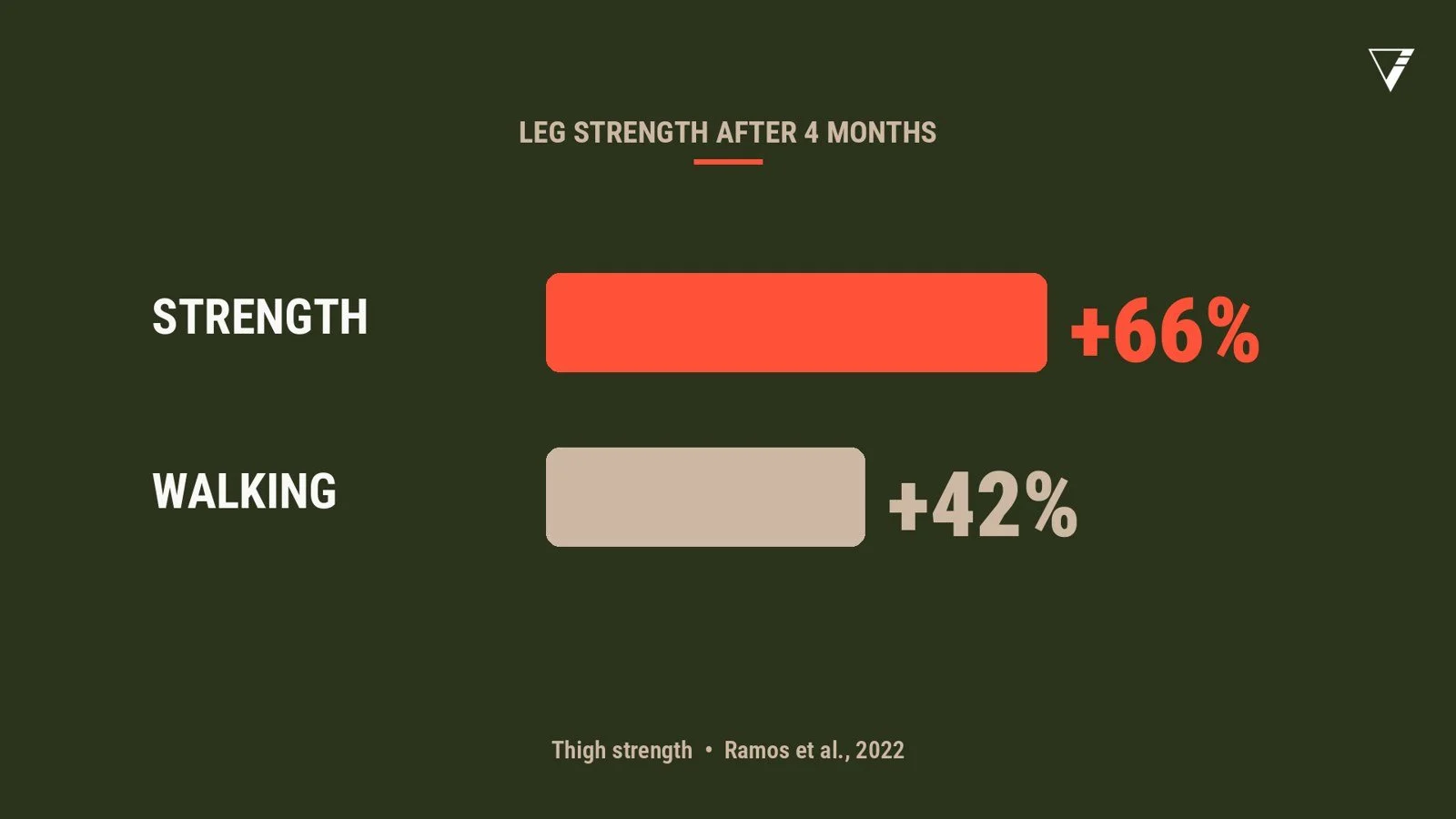
Leg strength went up in both groups. About 66% with strength training. About 42% with walking. That walking number surprises people. We'll come back to why.
THE TEST THAT MATTERS MOST
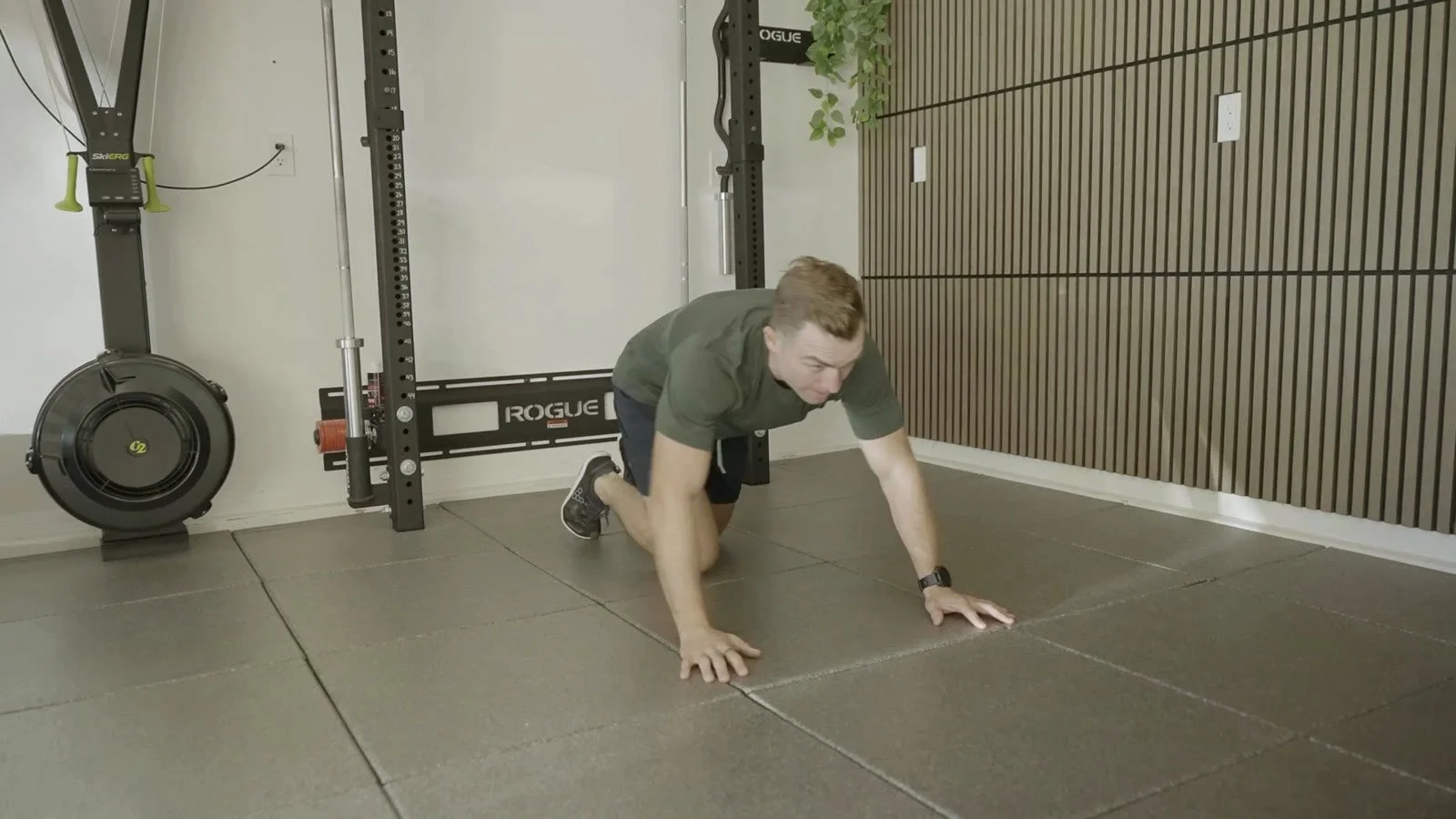
The researchers also timed how long it took each person to go from lying on their belly on the floor to standing up. The scientists call it the "stand up from ventral decubitus position" test. We call it getting up off the floor.
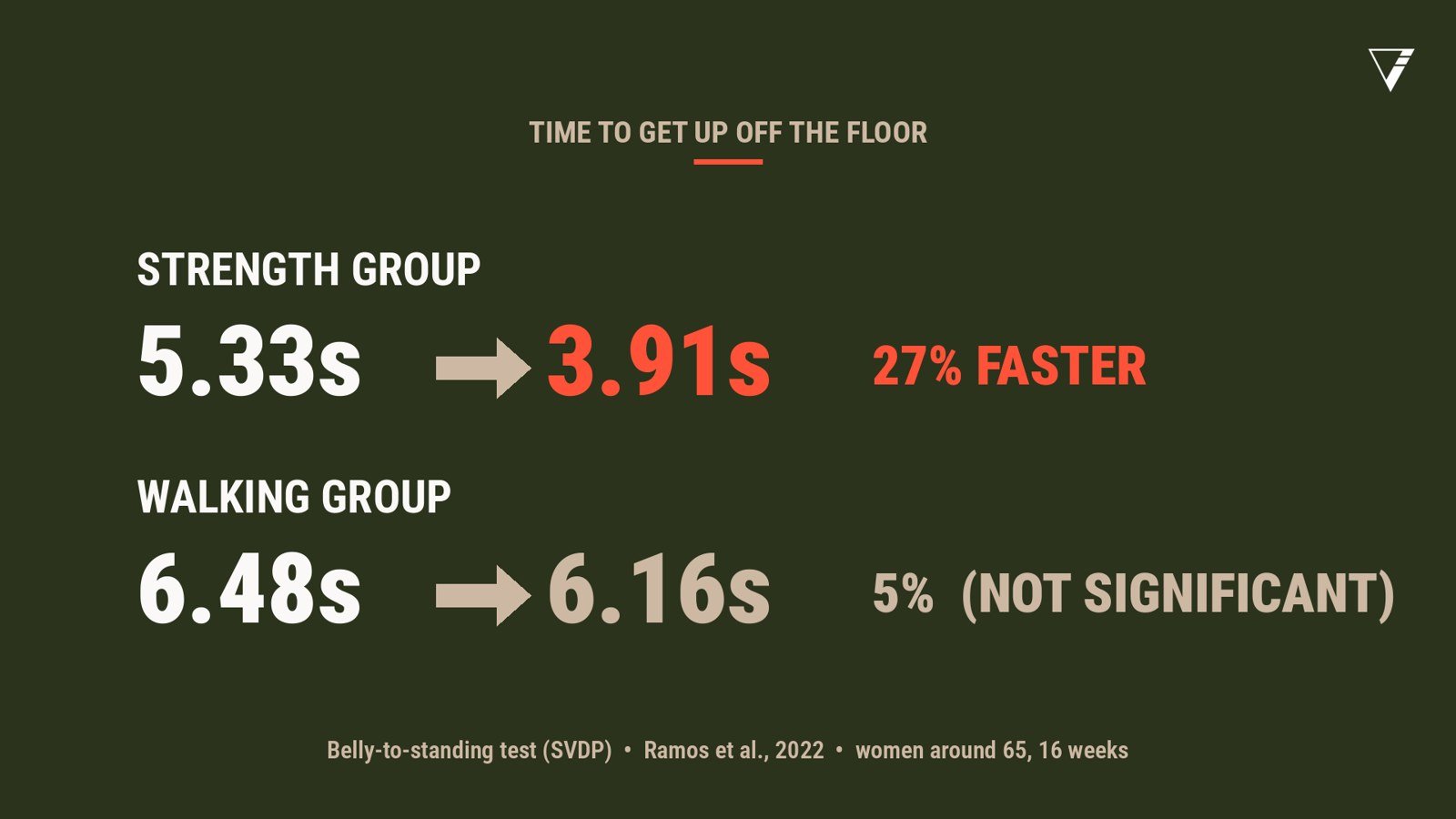
Strength group: 5.33 seconds down to 3.91 seconds. 27% faster.
Walking group: 6.48 seconds down to 6.16 seconds. 5%, which wasn't statistically significant.
Here's why this matters.
If you fall and can't get yourself back up, living on your own gets a lot harder. Your independence is on the line. And the slower you are at getting up now, the sooner that ability slips away.
Walking helps your heart. Strength training is what keeps you able to get up off the floor.
WHY STRENGTH FADES FASTER THAN MUSCLE
Most people worry about losing muscle as they age. Fair. But a 2006 study (Goodpaster et al.) found we lose strength about three times faster than we lose muscle.
Part of the reason is muscle fiber type.
Type 1 fibers are slow twitch. Built for endurance.
Type 2 fibers are fast twitch. Built for power and quick reactions.
We lose type 2 fibers faster as we age. They're expensive for your body to keep. If you don't give your body a reason to hold onto them, like heavy, progressive strength training, they go.
And you need them more as you get older. Pushing up out of a chair. Getting off the floor. Catching yourself when you trip.
Think of your type 2 fibers like a 401(k). Strength training is your weekly deposit. The earlier you start and the longer you invest, the bigger the reserve you'll have when an injury, an illness or a fall sets you back.
The good news? It's never too late to start investing. In a 1990 study (Fiatarone et al.), people in their 90s built real muscle and strength with a progressive resistance program.
SO WHY DID WALKING BUILD LEG STRENGTH
Early on, almost anything works. Boot camp. Water aerobics. Yoga. Chair exercise. Pilates. Even walking.
But your body adapts. Over time, the challenge has to get more specific and more intense to keep building strength. If this study had run longer, we'd expect strength training to pull further ahead.
YOU NEED BOTH
A trial in the New England Journal of Medicine (Villareal et al., 2017) followed 160 adults over 65 with obesity for six months. Everyone followed a weight-loss diet. Then they were split into strength, cardio or both.
Cardio fitness rose 18% in the cardio group and 8% in the strength group.
Strength rose 19% in the strength group and 4% in the cardio group.
No surprise there. You get better at what you train.
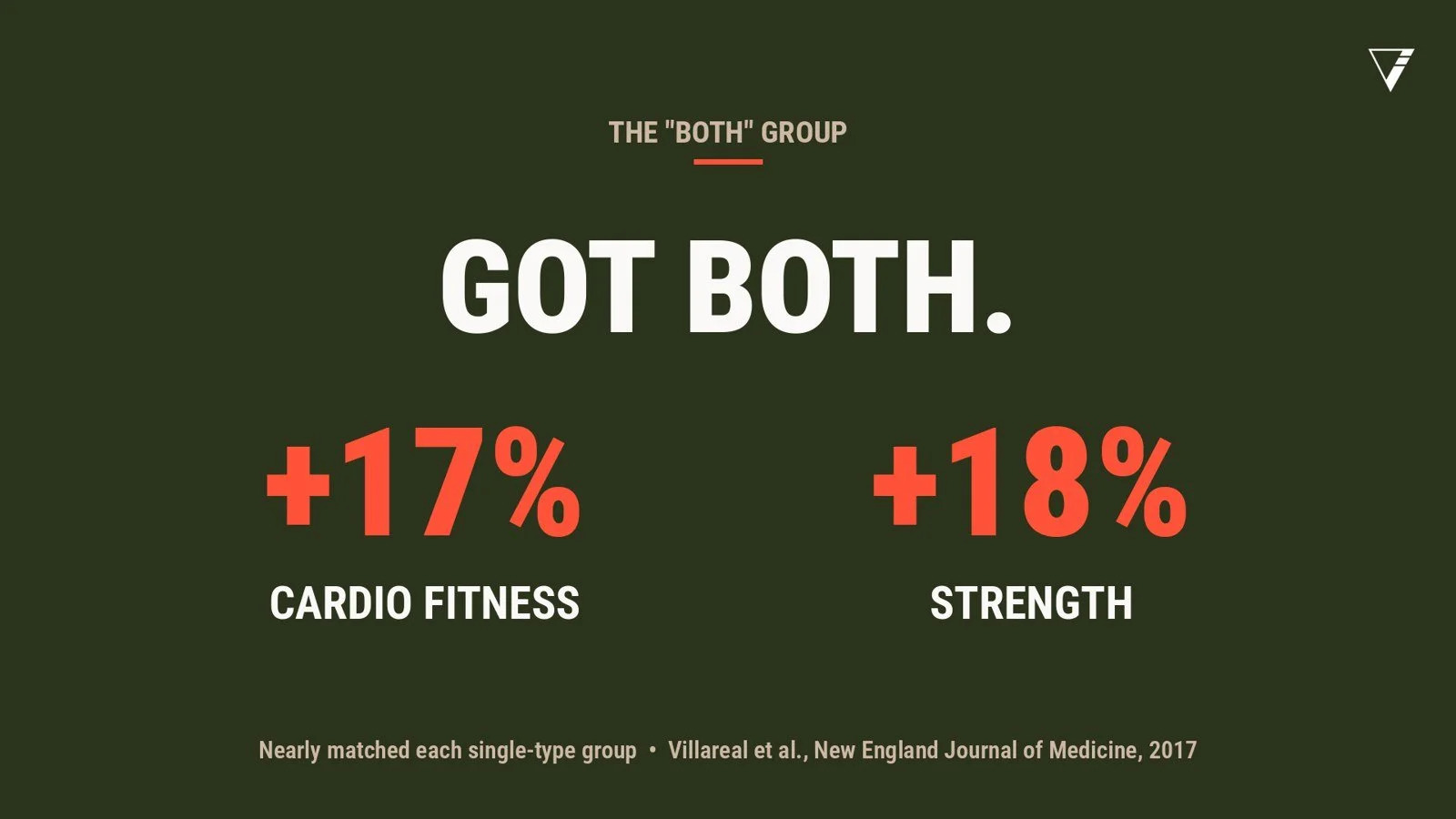
The cool part? The group that did both improved strength about as much as the strength group (18%) and cardio fitness about as much as the cardio group (17%).
You can have your cake and eat it too.
THE PLAN
Here's what we recommend for adults over 50. Six days a week.
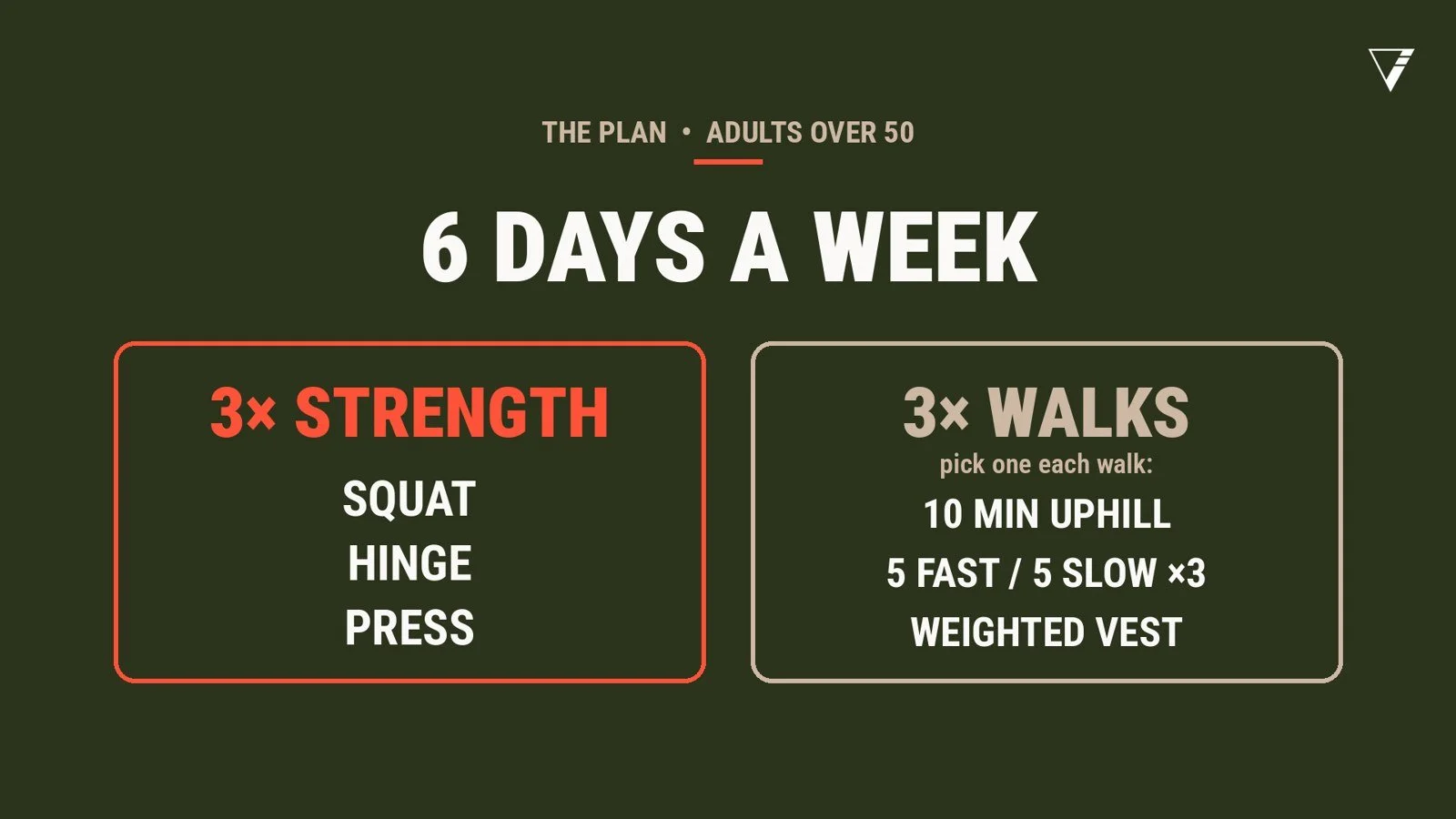
3 days of strength training: a squat, a hinge and a press.
3 days of walking: about 30 minutes, with one of the options below.
New to walking? Start with less. Already an avid walker? Go up to 60 minutes, or walk every day. It won't get in the way of your strength training.
PICK ONE FOR EACH WALK
10 minutes uphill. Joint friendly compared to running. Still a real cardio challenge.
5 minutes fast, 5 minutes slow, 3 times. People who walk faster tend to live longer. Train your speed.
A weighted vest or backpack. Extra cardio benefit without the pounding of running.

YOUR SQUAT
Find your starting point with one test. Sit in a chair and stand up.
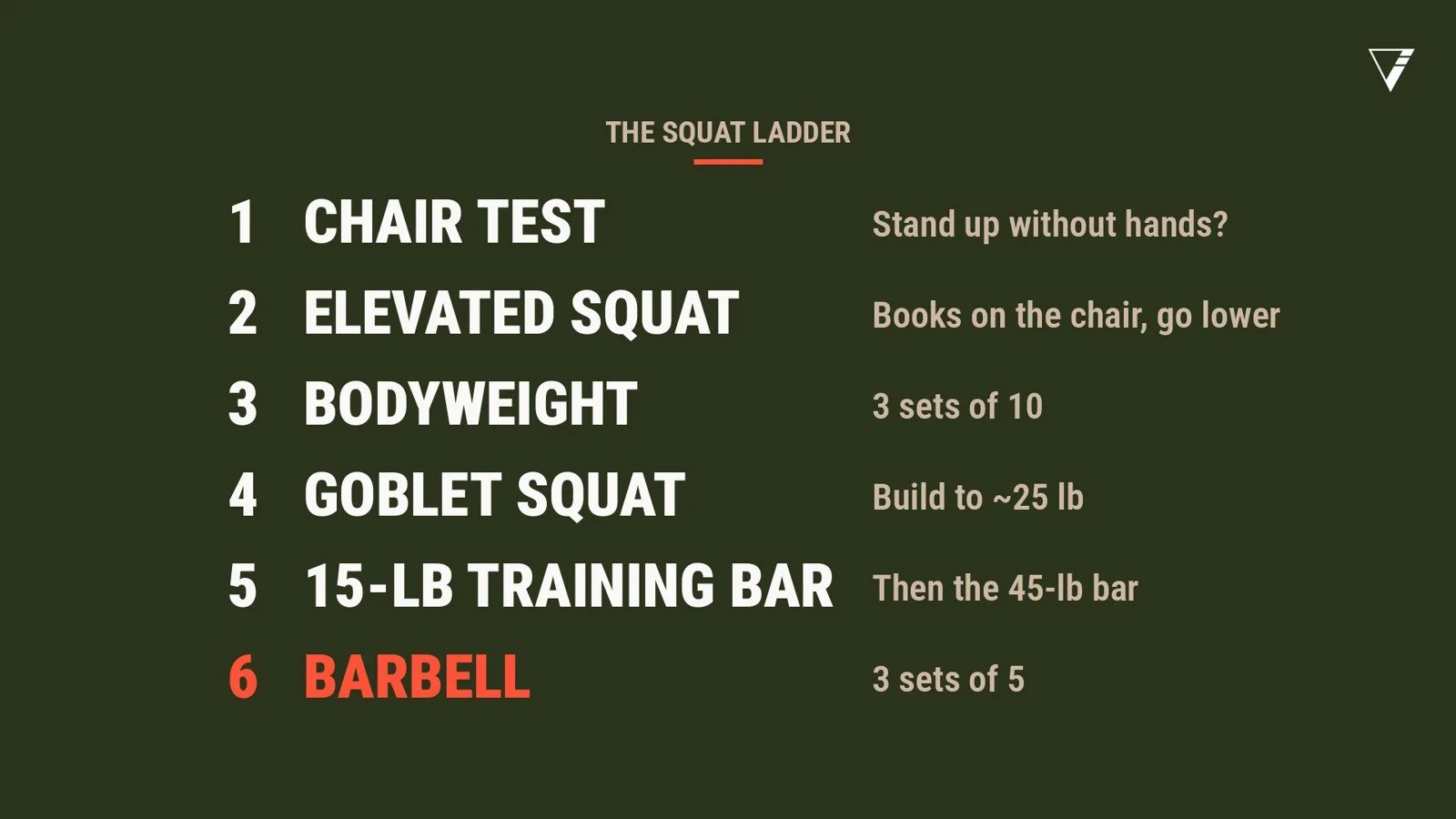
Can't stand up without using your hands or holding on? Start with an elevated squat. Stack books on the chair until you can stand without your hands, then lower it over time.
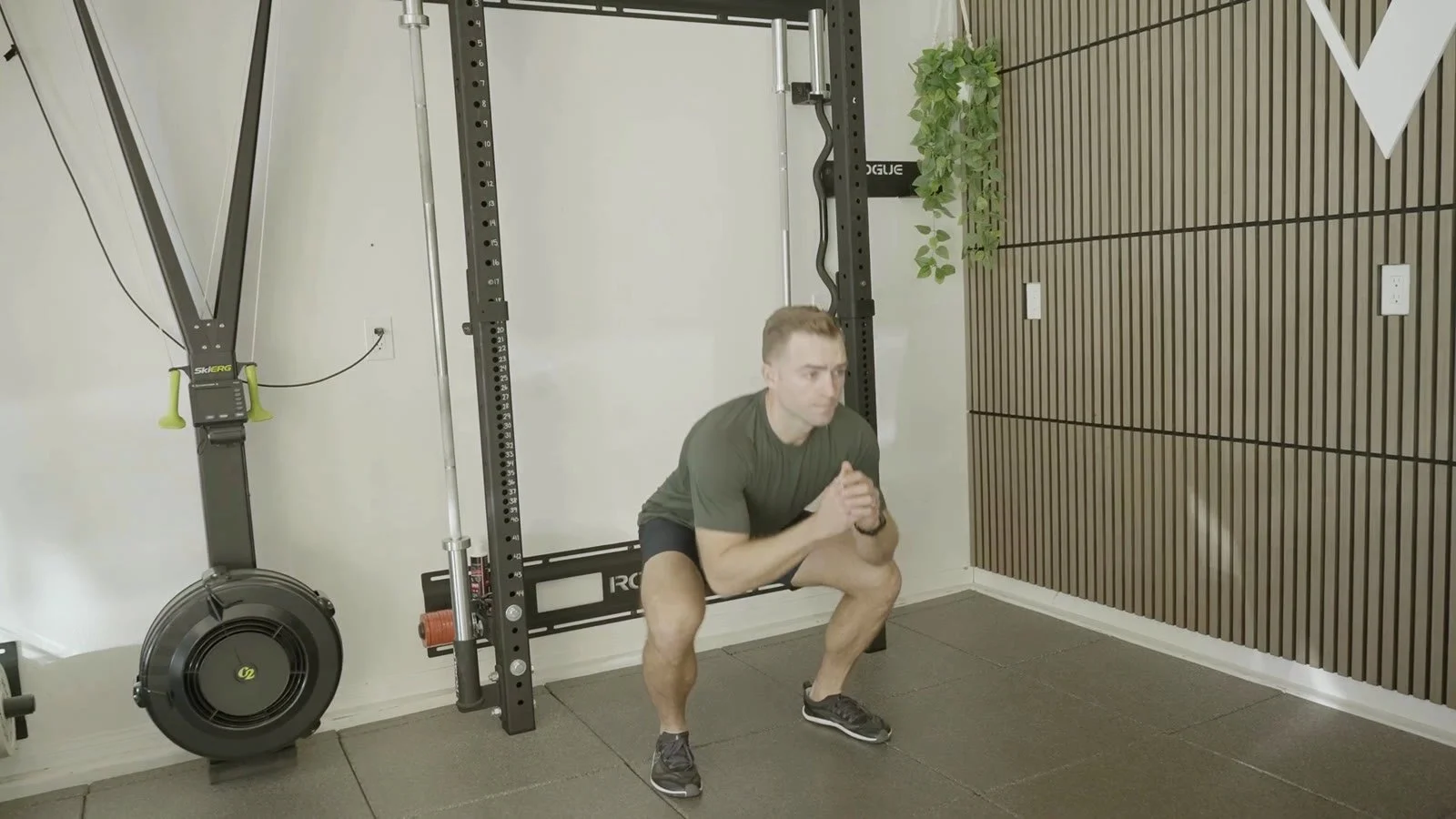
Can stand up from a normal chair? Do bodyweight squats. 3 sets of 10.
If 3 sets of 10 doesn't leave you overly sore or achy the next day, move to a goblet squat. Hold a weight under your chin and build to about 25 pounds.
Then a 15-pound training bar, working up to a standard 45-pound barbell. 3 sets of 5.
YOUR HINGE
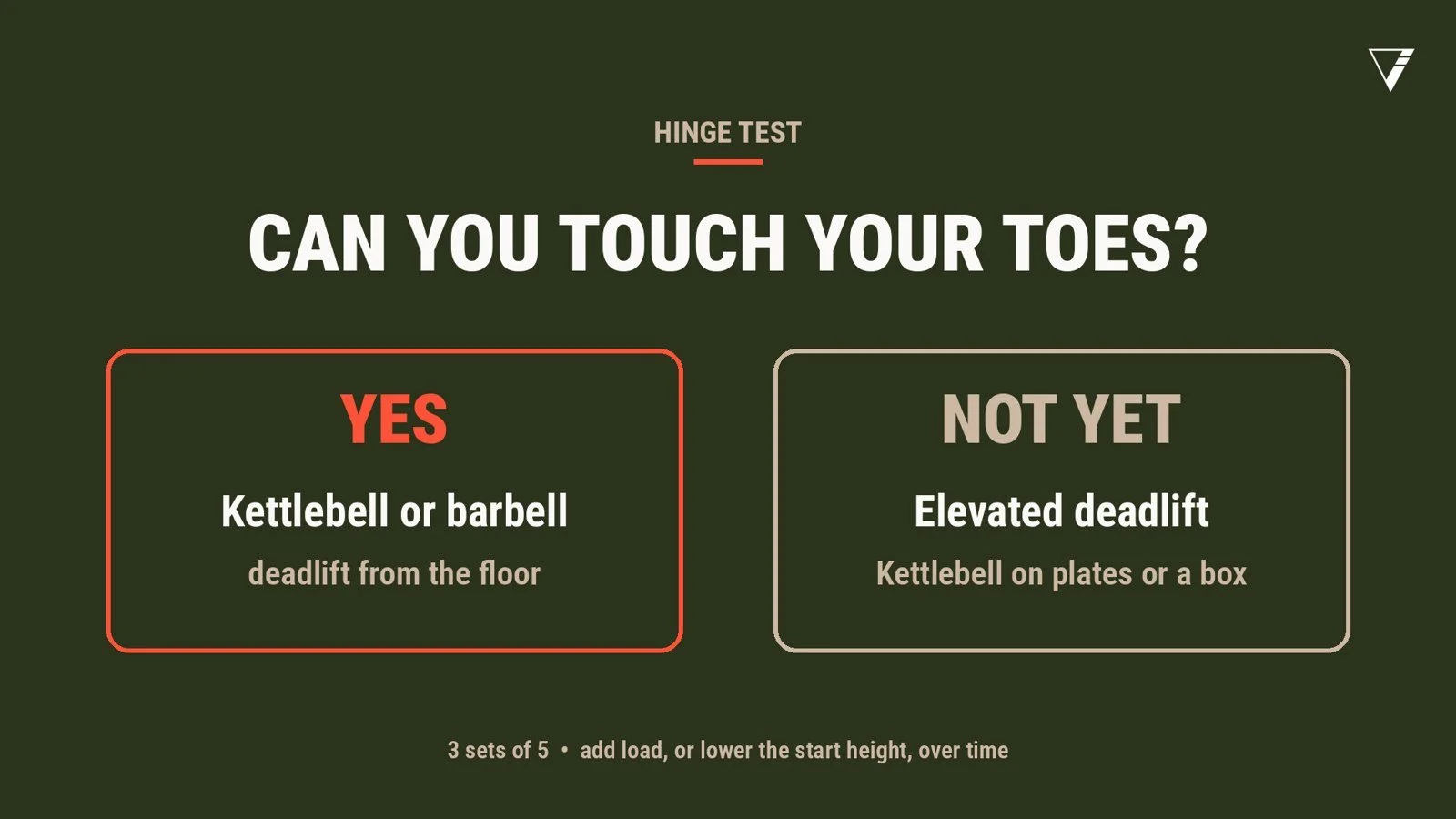
Reach down and try to touch your toes.
Yes? Start with a kettlebell or barbell deadlift from the floor.
Not yet? Start with an elevated deadlift. Set a kettlebell on plates or a box and lift it from there. A corner or a chair behind you adds balance support.
3 sets of 5. Add weight over time, or lower the starting height.
YOUR PRESS
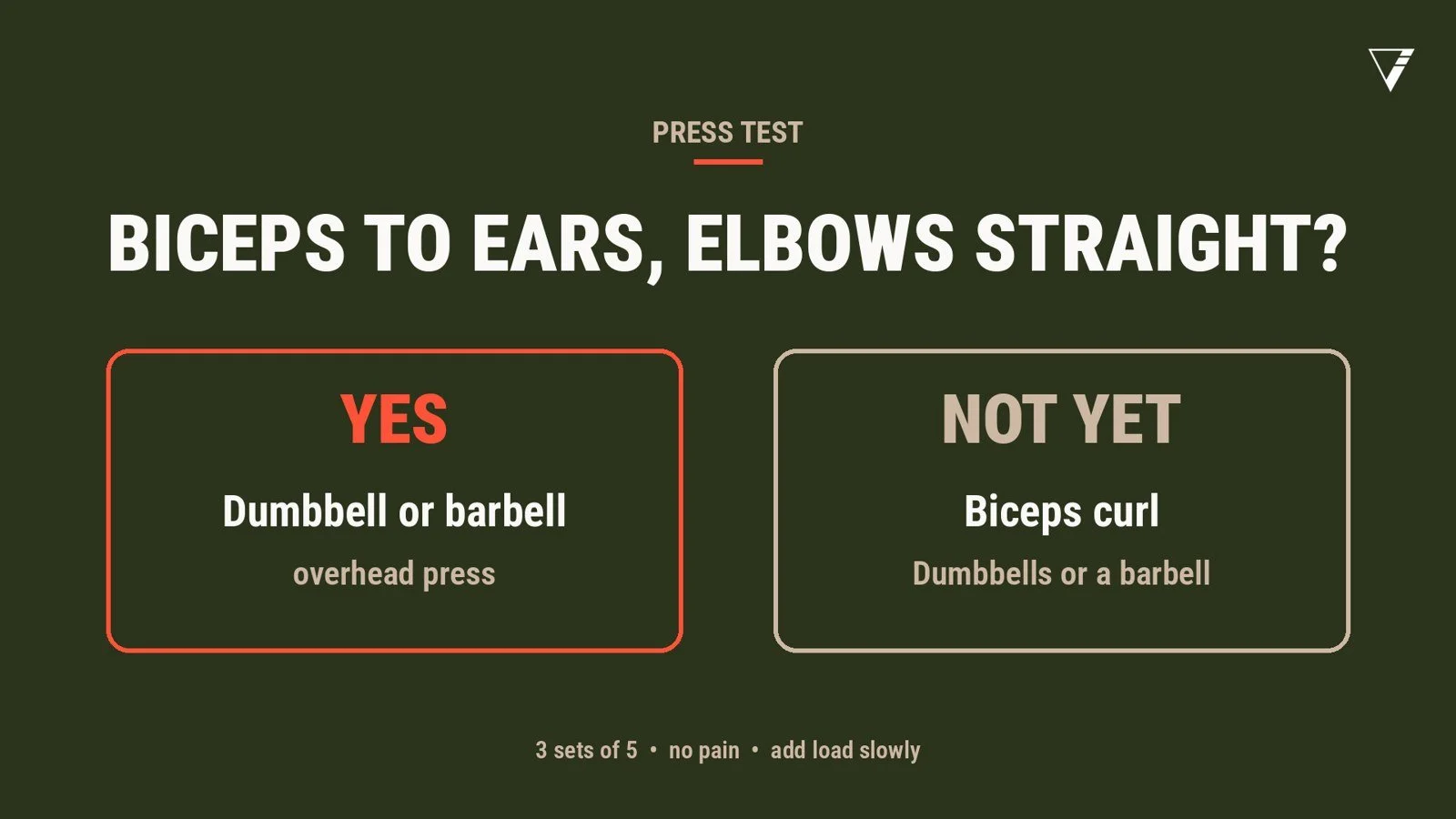
Raise your arms overhead.
Biceps to your ears with straight elbows, no pain? Start with a dumbbell or barbell overhead press.
Not yet? Start with a biceps curl.
3 sets of 5. Add weight slowly.
THE KEY
The two most common mistakes we see? People never challenge themselves and stay light forever. Or they jump to heavy, hard workouts way too fast.
You're smarter than that.
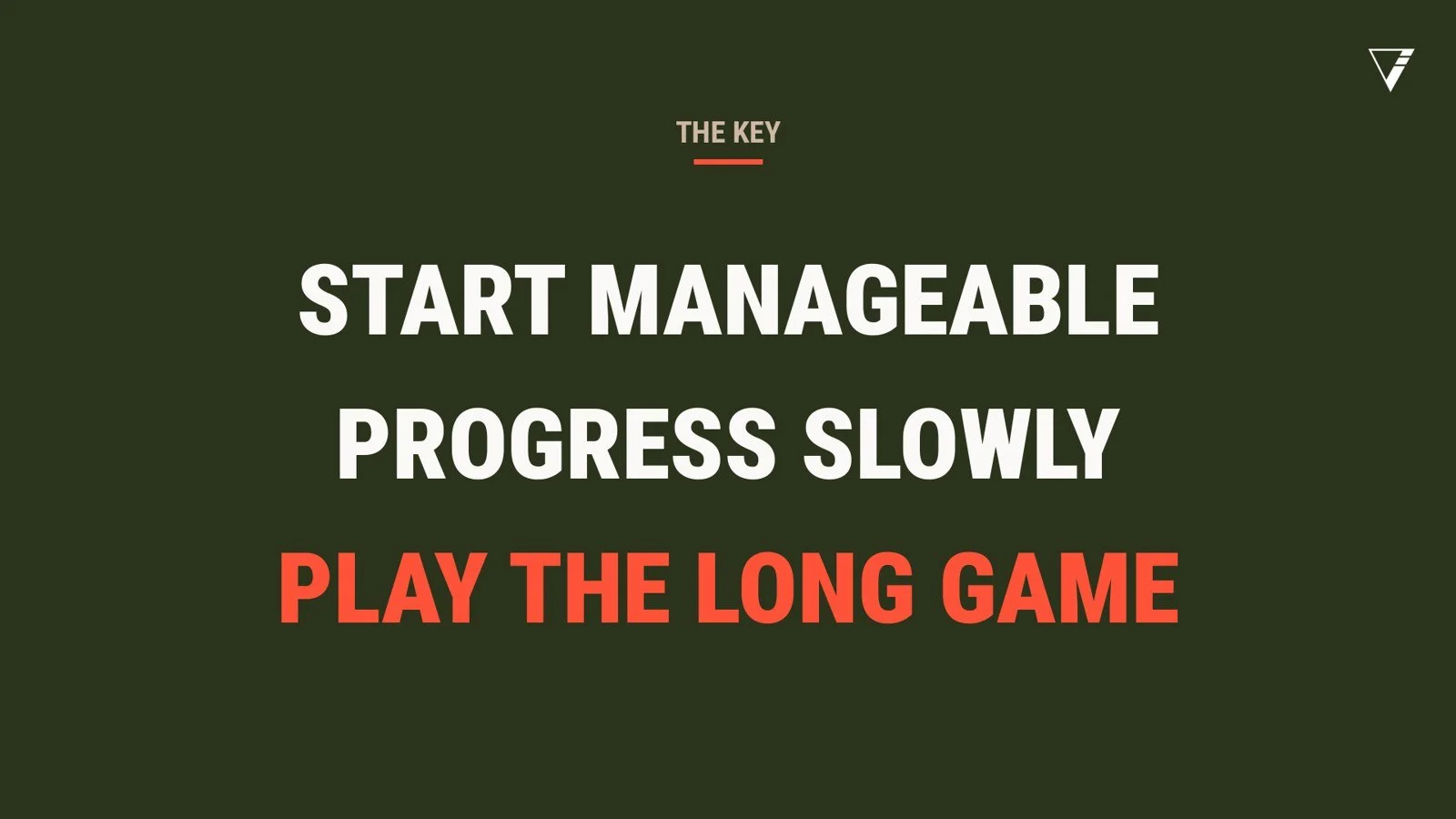
Start at a level that feels manageable. Progress slowly and steadily. This is a long game. You don't need to get there tomorrow. But a couple of years from now, you could have an incredible reserve of strength... so you can keep living life on your terms for decades.
QUICK ANSWERS
Is walking enough exercise after 50?
Walking is great for your heart and your health. But on its own it doesn't build the strength you need to get off the floor, out of a chair or catch yourself in a fall. Pair it with strength training.
How many days a week should I strength train after 50?
Three days a week works well for most adults over 50. Each session covers a squat, a hinge and a press.
Will walking every day hurt my strength gains?
No. Daily walking won't interfere with your strength training.
Is it too late to start strength training in my 70s, 80s or 90s?
No. People in their 90s have built muscle and strength with a progressive program.
WANT HELP GETTING STARTED
Every body is different. If you have pain, an injury or a health condition, check with your doctor or physical therapist before starting a new program.
And if you'd like a team in your corner, that's exactly what we do. Our doctors of physical therapy help adults over 40 build strength safely in Glendora, San Marino and Westlake Village. Inquire About Cost And Availability Here.
Stay strong,
Dr. Matt
RESEARCH
Ramos et al., 2022. Strength training vs. walking in women around age 65, 16 weeks.
Goodpaster et al., 2006. Strength vs. muscle loss in roughly 1,900 older adults.
Fiatarone et al., 1990. High-intensity strength training in people in their 90s.
Villareal et al., 2017, New England Journal of Medicine. Aerobic, resistance or combined exercise in older adults with obesity during weight loss.
