

You've heard creatine is for bodybuilders. Then a friend in her 60s tells you she takes it every morning. Now you're wondering if a scoop of powder could help you stay strong... even if you're not lifting weights right now.
It's a fair question. Getting out of a chair, carrying the groceries, staying independent. Strength matters more every year.
A new 2026 study from Texas A&M looked at this exact question. Here's what it found, what it really means for you, and how we recommend taking creatine.
THE SHORT ANSWER
In a 12-week study of adults 45 to 65, people who took 10 grams of creatine a day without exercising gained lean mass and got stronger on the bench press and leg press.
Some of that lean mass is water, not new muscle. Creatine pulls water into your muscles.
The group that exercised and took creatine did best. They gained the most strength and lost about 7 pounds of body fat.
Our take: keep strength training, add 3 to 5 grams of creatine monohydrate a day, and start slow.
THE NEW TEXAS A&M STUDY
Researchers at Texas A&M's Exercise and Sport Nutrition Lab followed 64 healthy adults, ages 45 to 65, for 12 weeks. Each person took 10 grams of creatine monohydrate a day or a placebo.
That's what makes this study stand out. Most research uses 3 to 5 grams, or a high dose for a very short time... like a single day. This one tested a bigger dose, for longer, in older adults.
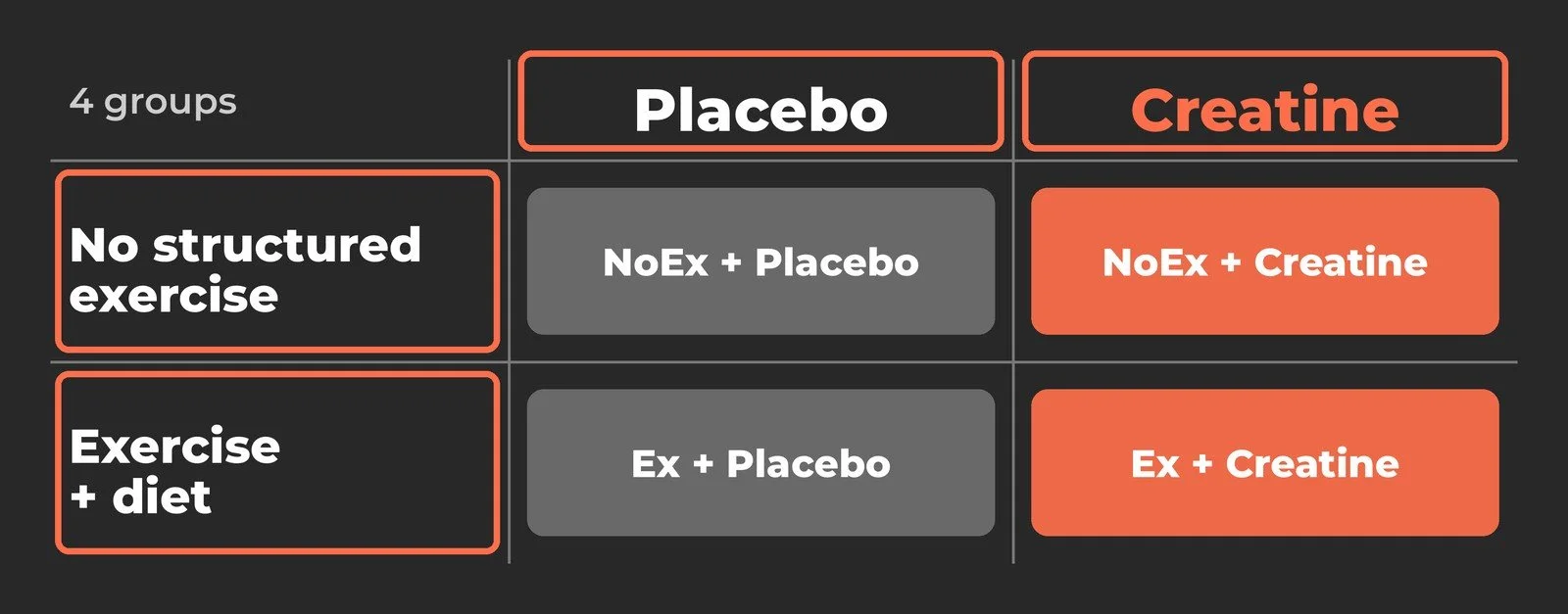
They compared four groups:
No structured exercise, plus placebo
No structured exercise, plus creatine
Exercise and diet, plus placebo
Exercise and diet, plus creatine
WHAT THEY FOUND
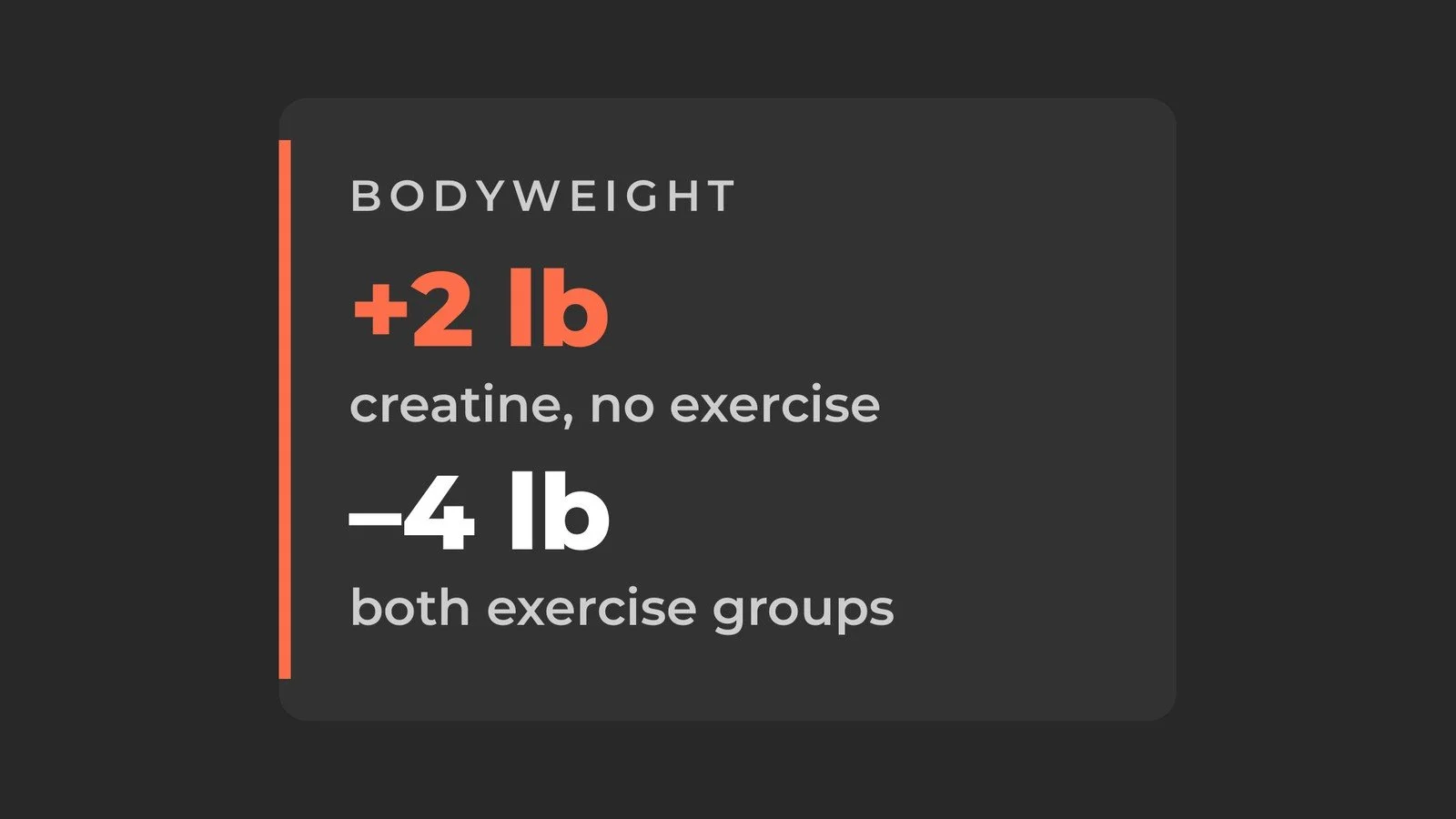
Bodyweight. The no-exercise creatine group gained about 2 pounds over the 12 weeks. Both exercise groups lost about 4 pounds.
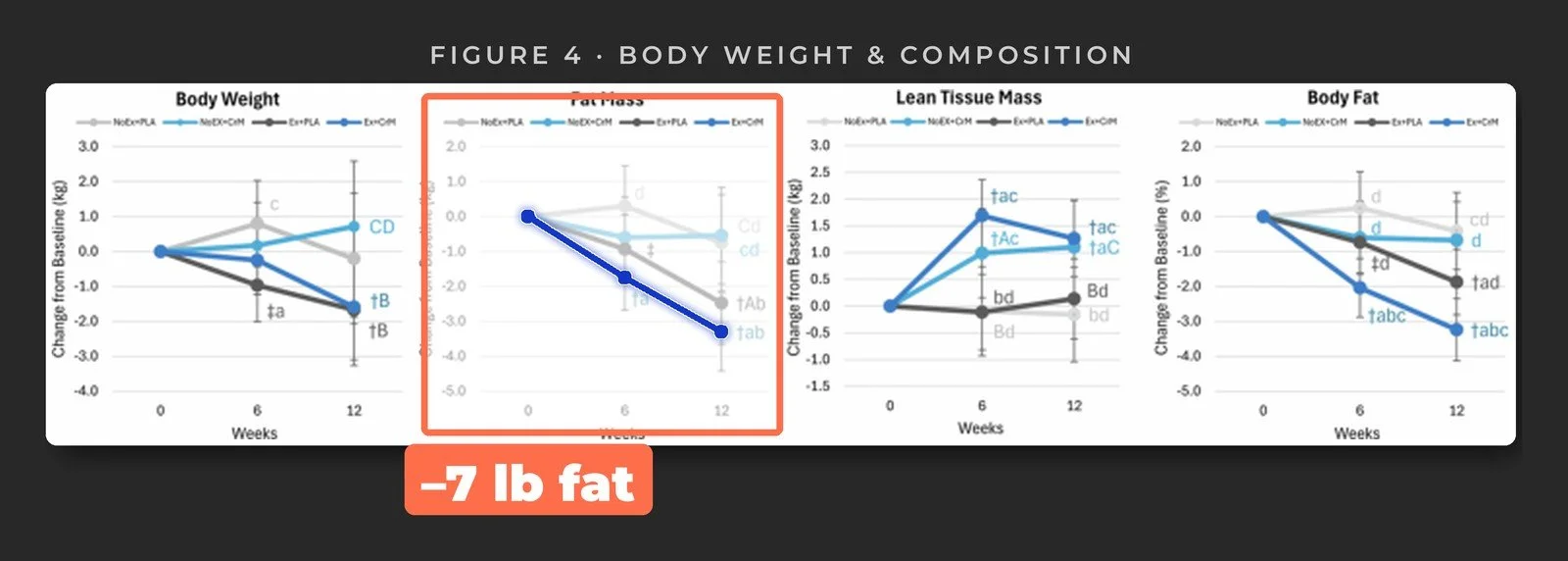
Body fat. Both exercise groups lost fat. The exercise plus creatine group lost a whopping 7 pounds of body fat in just 12 weeks.
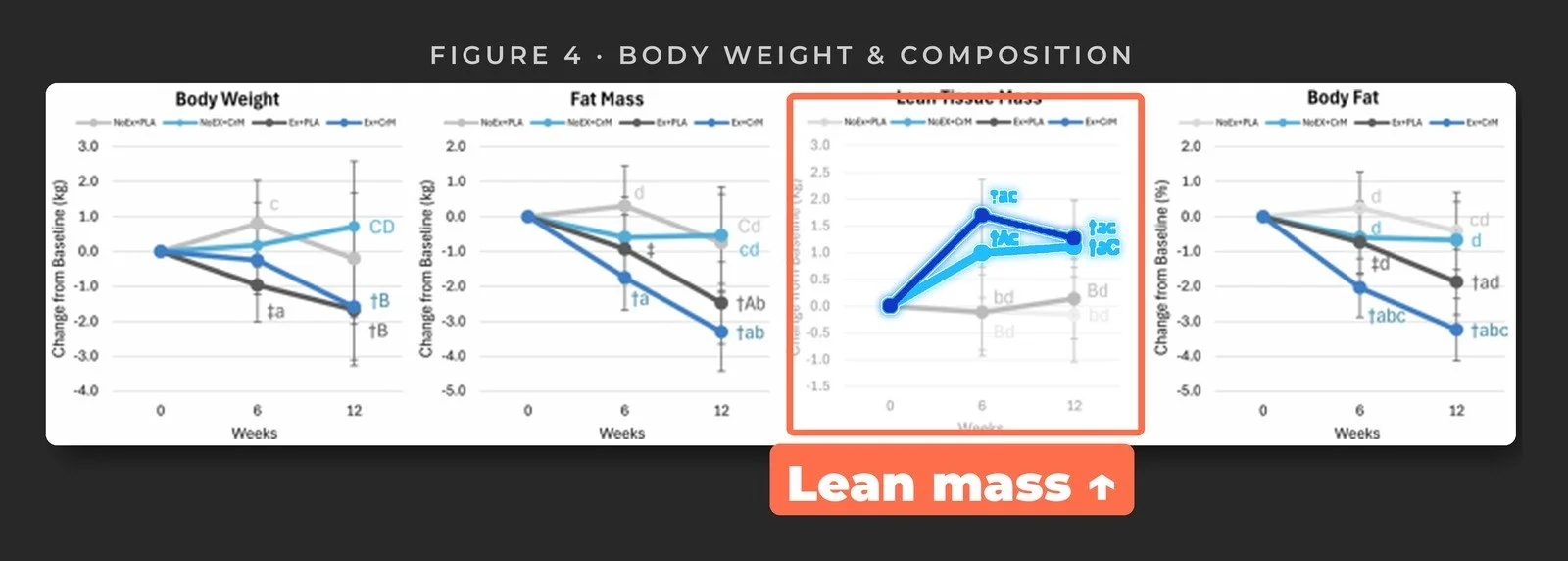
Lean mass. Both creatine groups increased lean mass. The placebo groups did not.
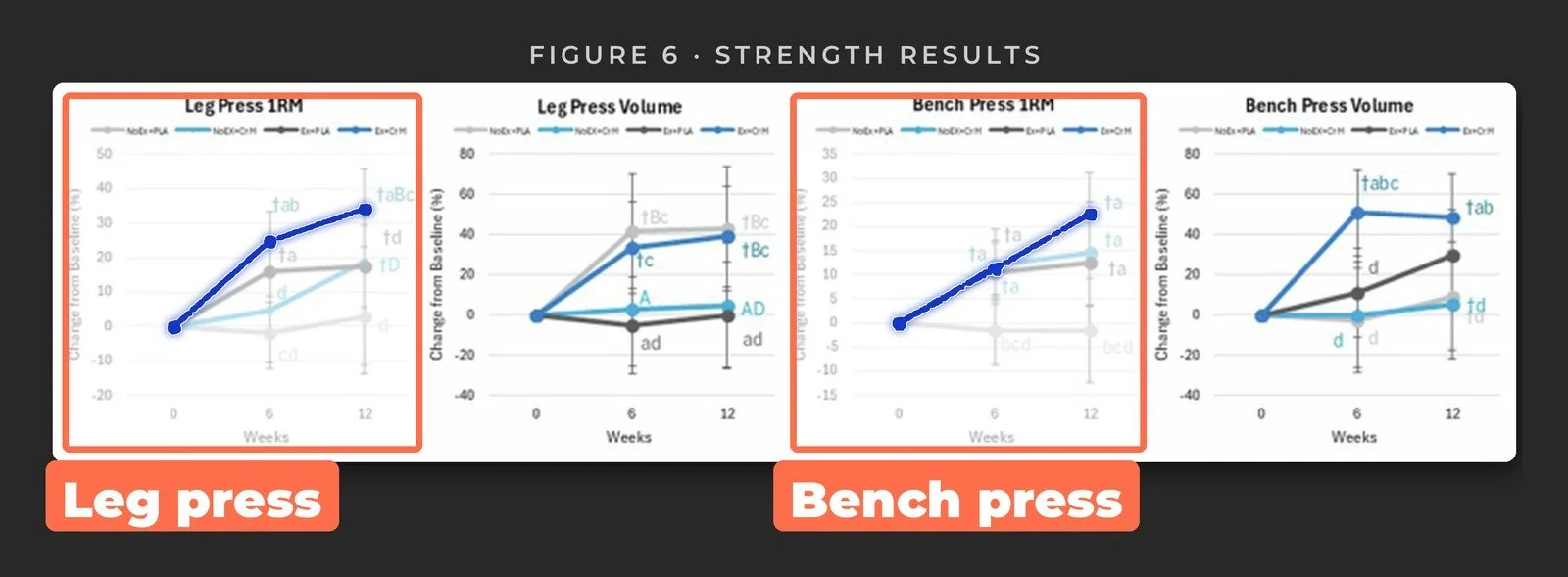
Strength. This is the big one. The creatine group that didn't exercise got stronger on the bench press and the leg press. The creatine plus exercise group got even stronger on both.
IS IT REALLY NEW MUSCLE
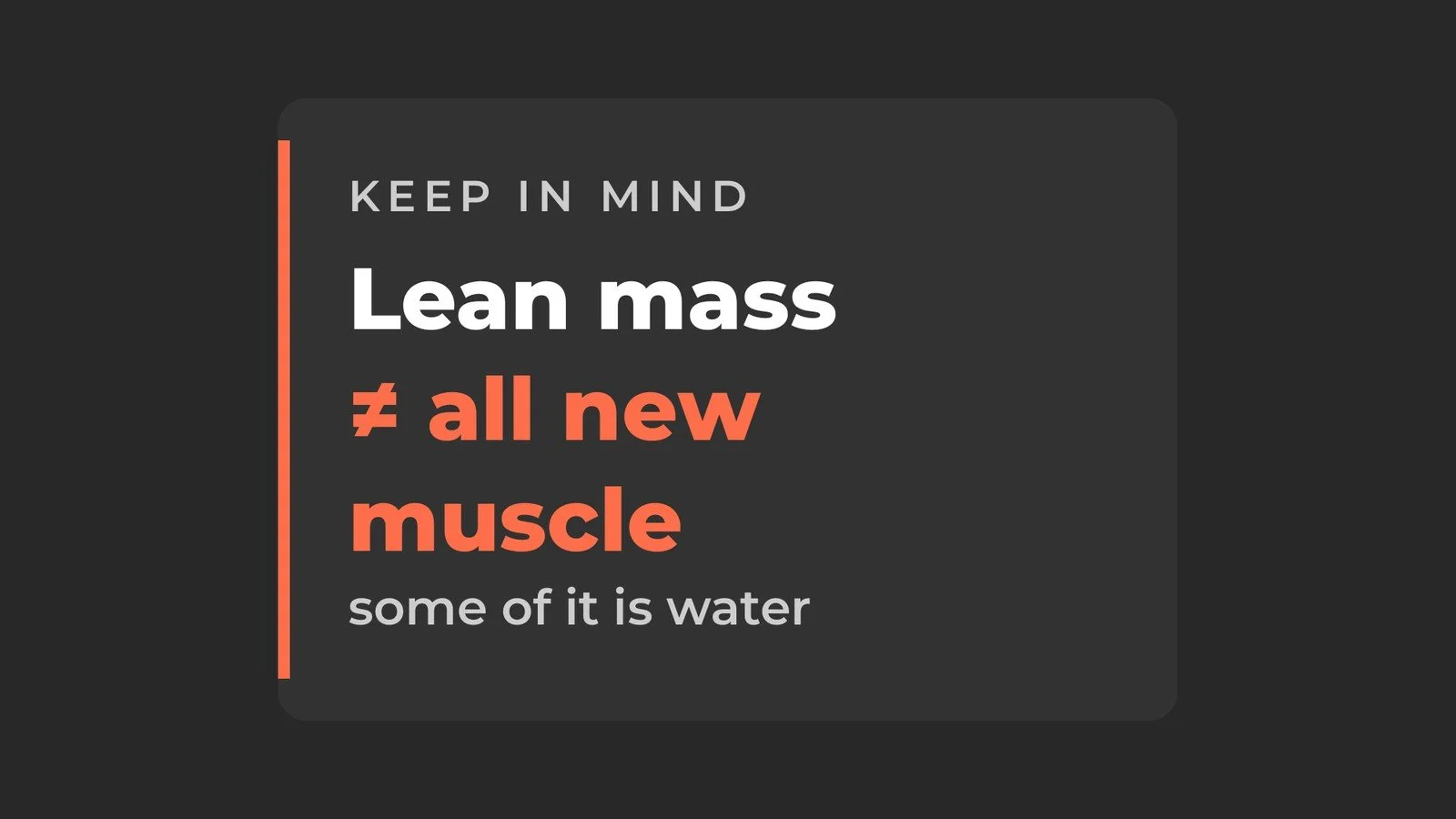
Here's the catch. "Lean mass" on a body scan isn't the same thing as muscle. It includes water.
Creatine is osmotically active. That's a fancy way of saying it pulls water into your muscles, so they look fuller and larger.
So we can't say all of that lean mass was new muscle tissue. Some of it is water.
Water isn't the main way creatine makes you stronger. It just explains part of the lean mass gain in the people who took creatine without exercising.
THE MOST INTERESTING FINDING
Creatine without exercise improved strength. That's the most unique finding in the whole study.
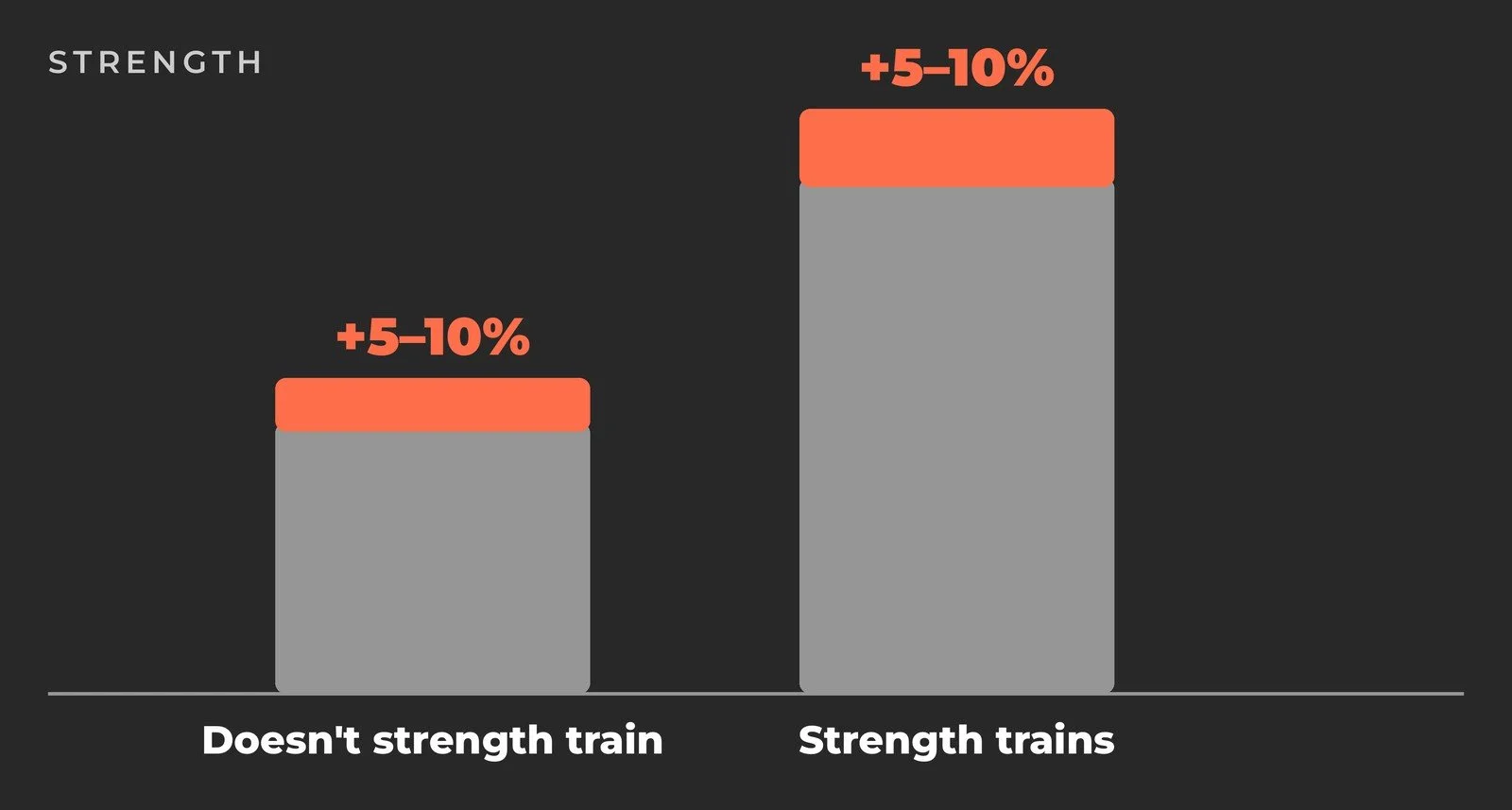
In my experience, creatine adds about 5 to 10% to your top-end strength. If you don't strength train, you add 5 to 10% to the strength you have now. If you do strength train, you start from a much stronger place... and add 5 to 10% on top of that.
WHY EXERCISE STILL WINS FOR FAT LOSS
When it came to losing fat, the two exercise groups far outperformed the creatine-only group.
That's not a surprise. Strength training raises your metabolic rate for hours and days after a session. You burn more calories, and it's one of the best ways to lose body fat.
Creatine doesn't replace that. It adds to it.
WHAT ABOUT MEMORY
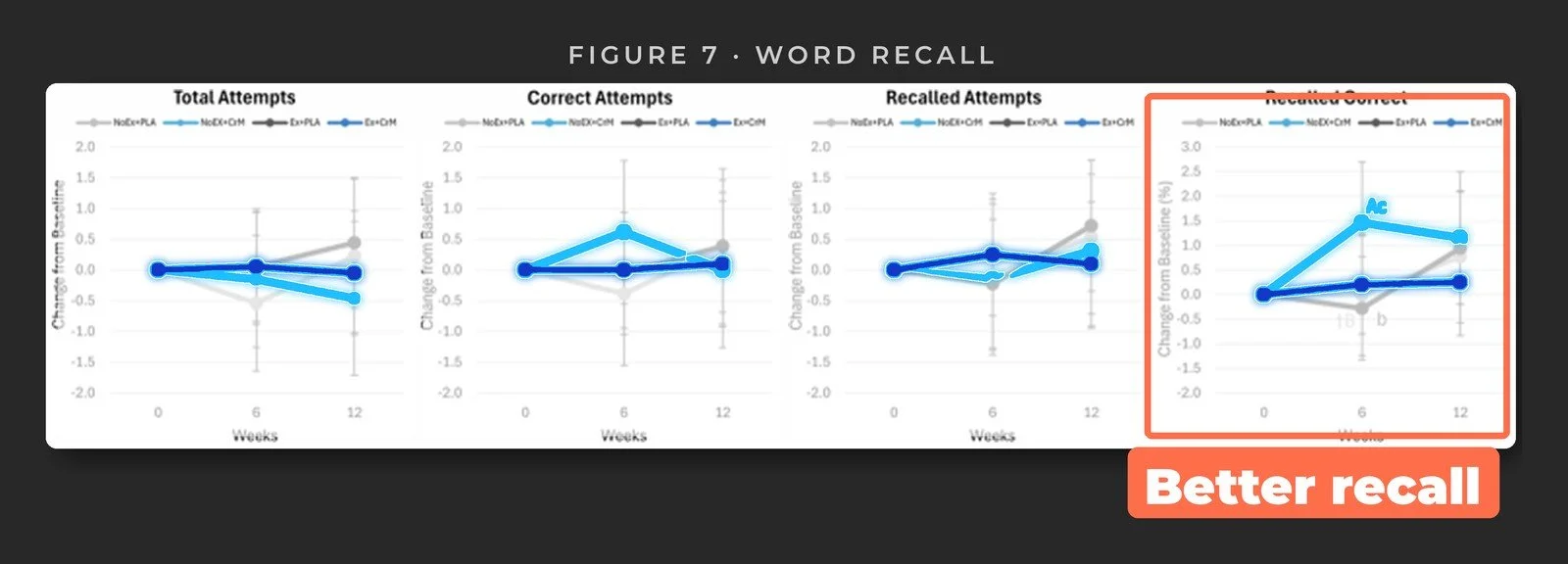
The researchers also tested memory, thinking and processing speed. Some results were promising and showed an effect on short- and long-term memory. Others were mixed and showed no change.
The researchers called these exploratory findings. More research is needed to confirm them.
You may have heard that the first 5 grams of creatine goes to your muscles and the next 5 grams goes to your brain. We haven't seen conclusive research that proves it. It's a nice thought. And people in this study did see some brain benefits on 10 grams a day, which raises good questions about those extra 5 grams.
HOW TO TAKE CREATINE
Here's what we recommend to our clients.
YOUR TYPE
Choose creatine monohydrate. There are a lot of formulas out there. In the research, monohydrate was just as effective or more effective than the others, and it's the most cost-effective form.
YOUR DOSE
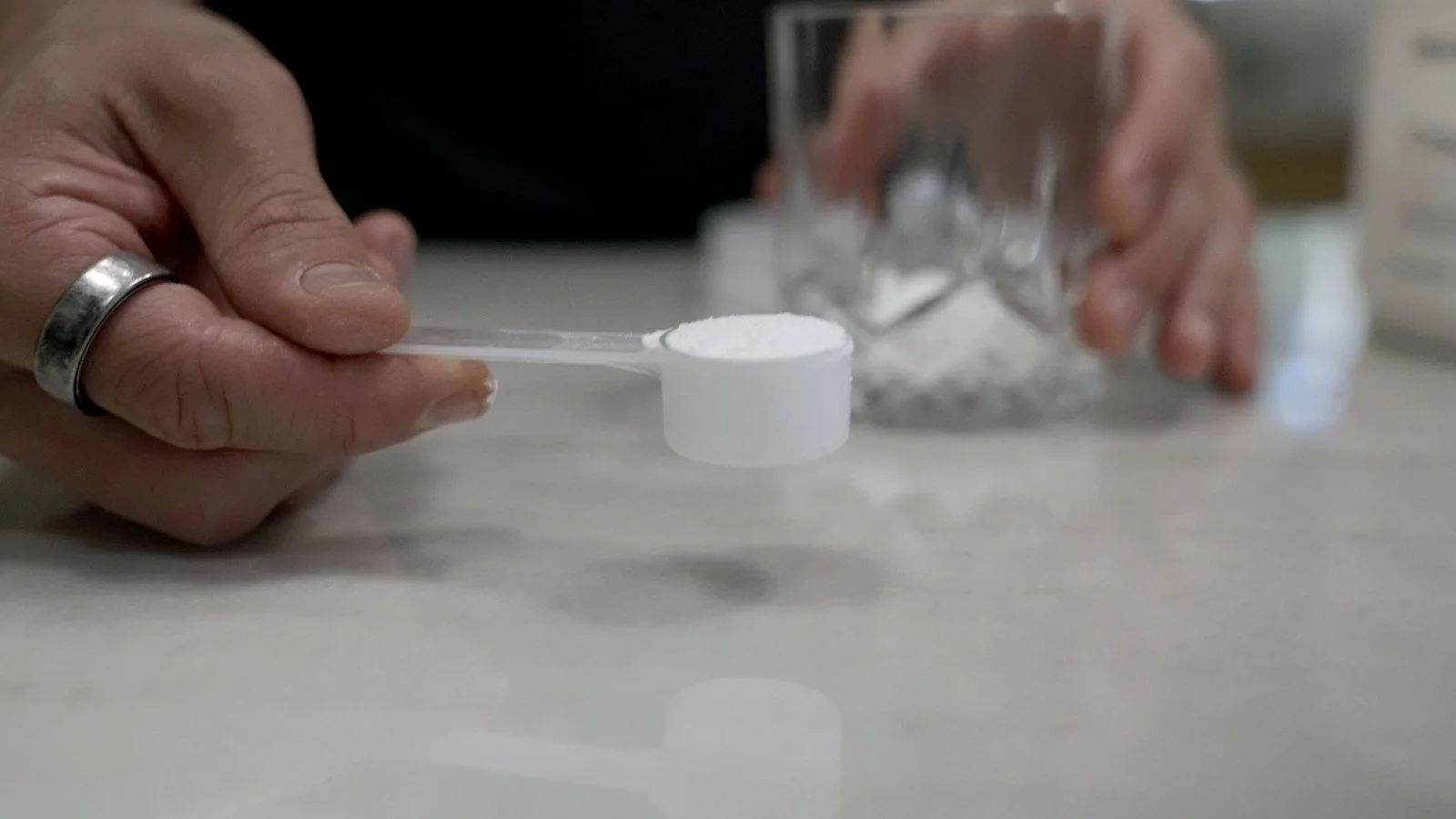
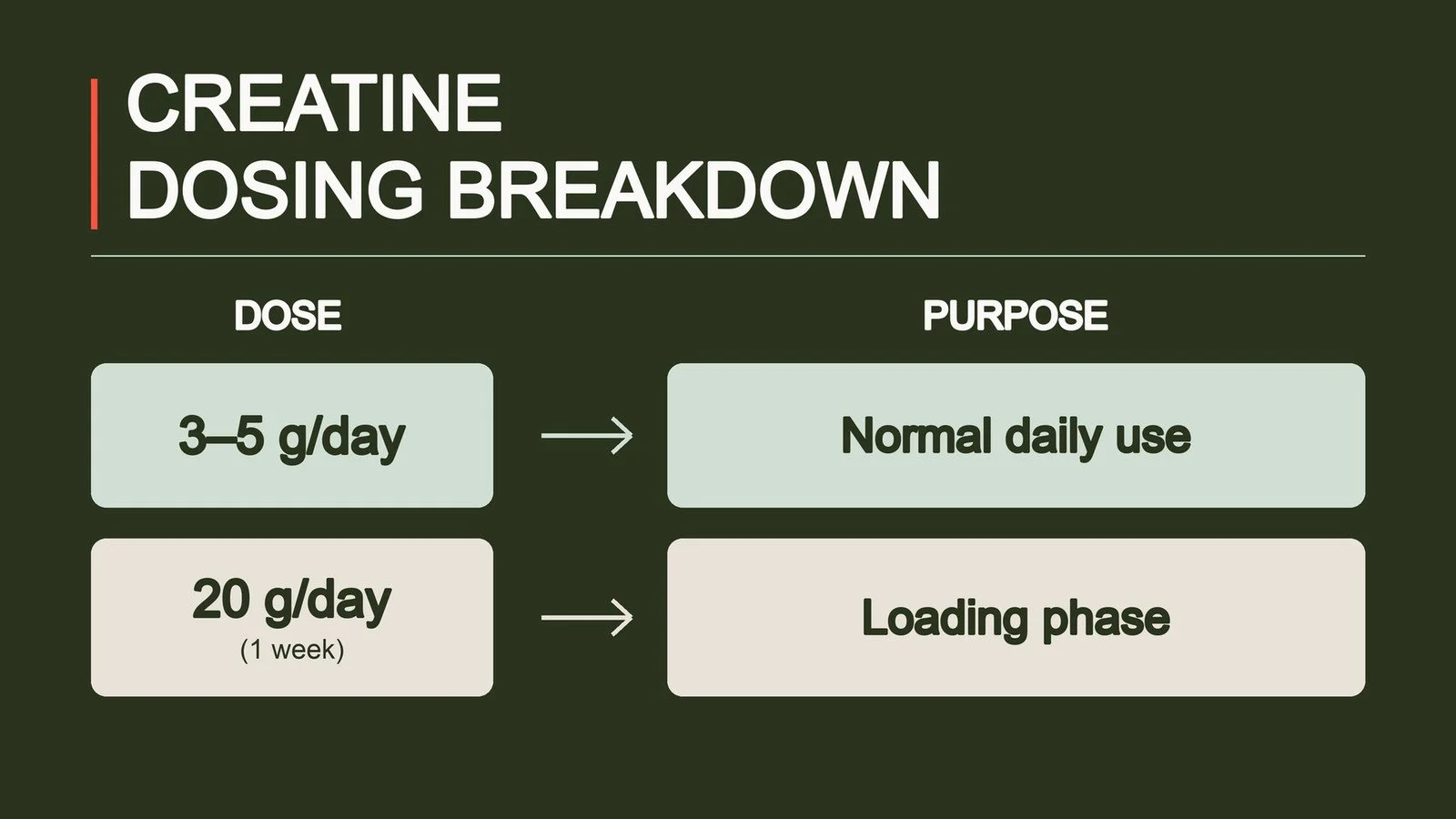
Start with 3 to 5 grams a day. A typical scoop is 5 grams... but check the serving size on the back of your container.
SKIP THE LOADING PHASE
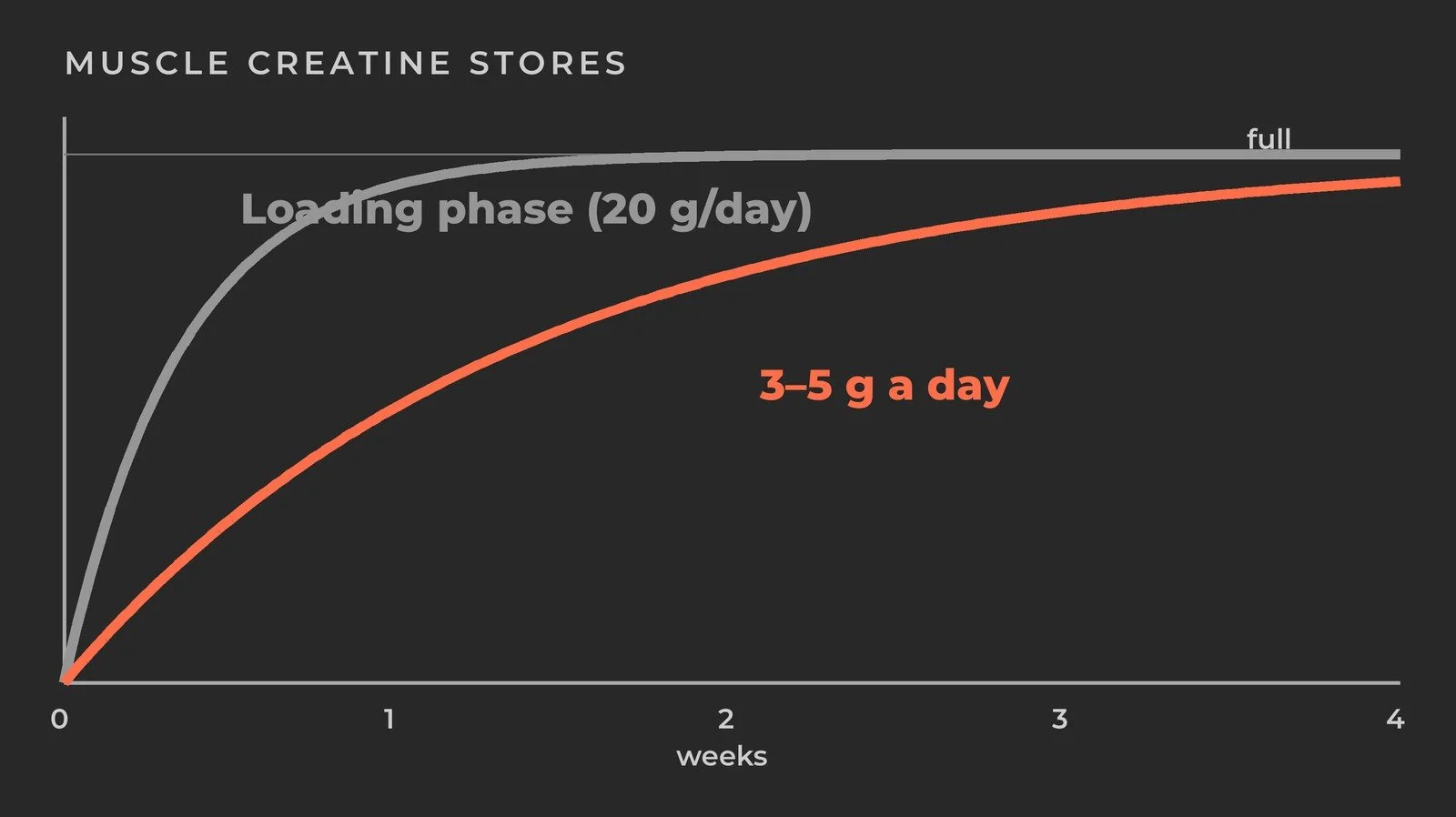
Some people say you need a loading phase, where you take a higher dose for the first week to fill up your muscles. We don't think that's necessary.
Over a month or two at a normal dose, your muscles get fully saturated anyway. And you avoid the stomach issues that can come with big doses your body isn't used to.
IF IT UPSETS YOUR STOMACH
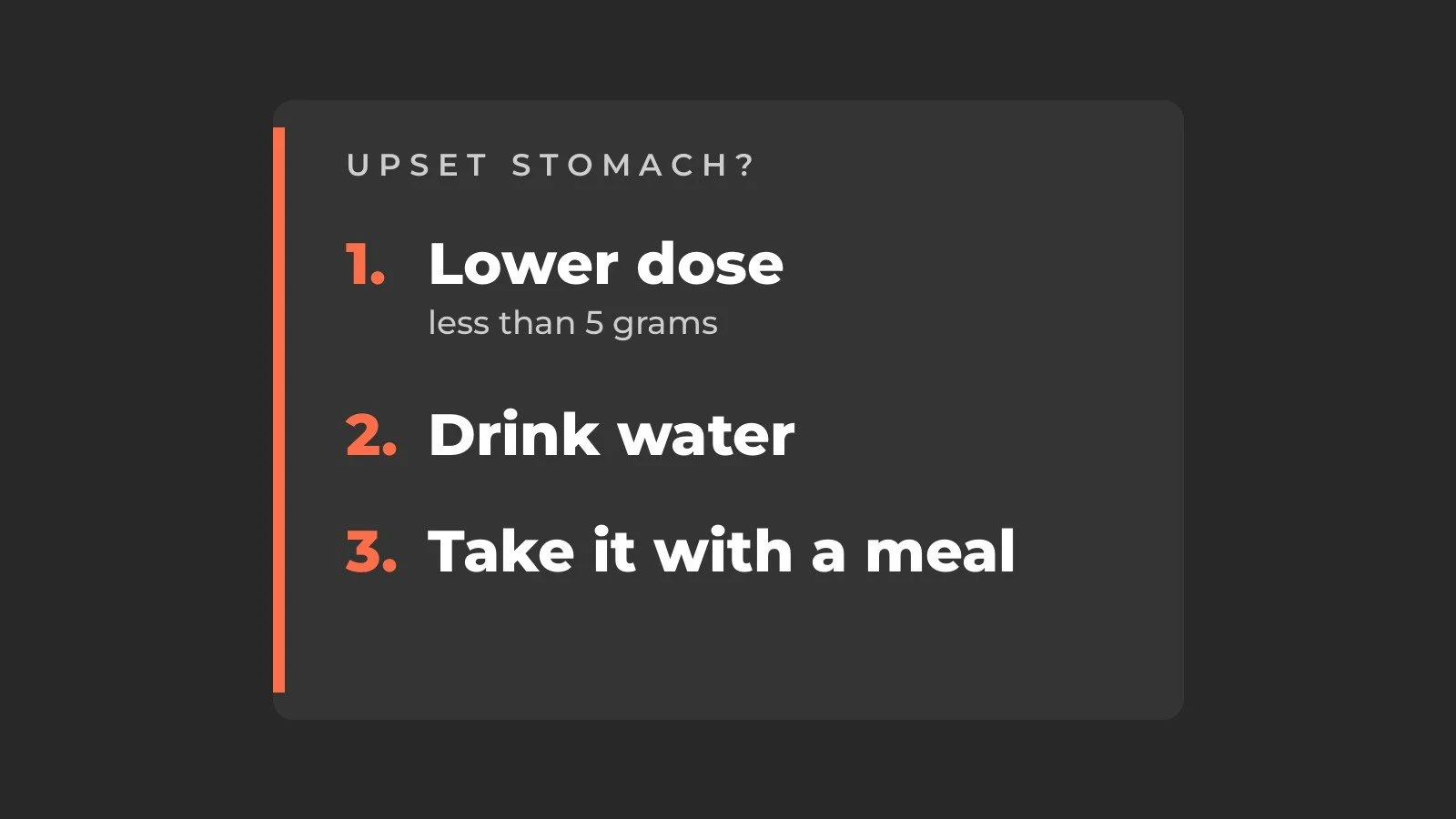
Stomach discomfort is one of the most common side effects. Three simple fixes:
Start with a lower dose, even less than 5 grams.
Drink plenty of water.
Take it with a meal, so you have something in your stomach.
THE CREATINE WE USE
We use and recommend Momentous Creatine Monohydrate. It's NSF Certified for Sport, third-party tested, and clear about what is and isn't in it. I've used it myself for years. Their new Signature Spec is a finer powder that dissolves better in water, so it isn't as grainy.
Use code VILLAGEFITNESS for 15% off your order. [Momentous Creatine]
Prefer chews? They work, but each chew has 1 gram of creatine and 10 calories. Getting 10 grams means 10 chews and 100 extra calories. Personally, I mix the powder in water every morning before I start my day.
Any form works... as long as it's creatine monohydrate and third-party tested.
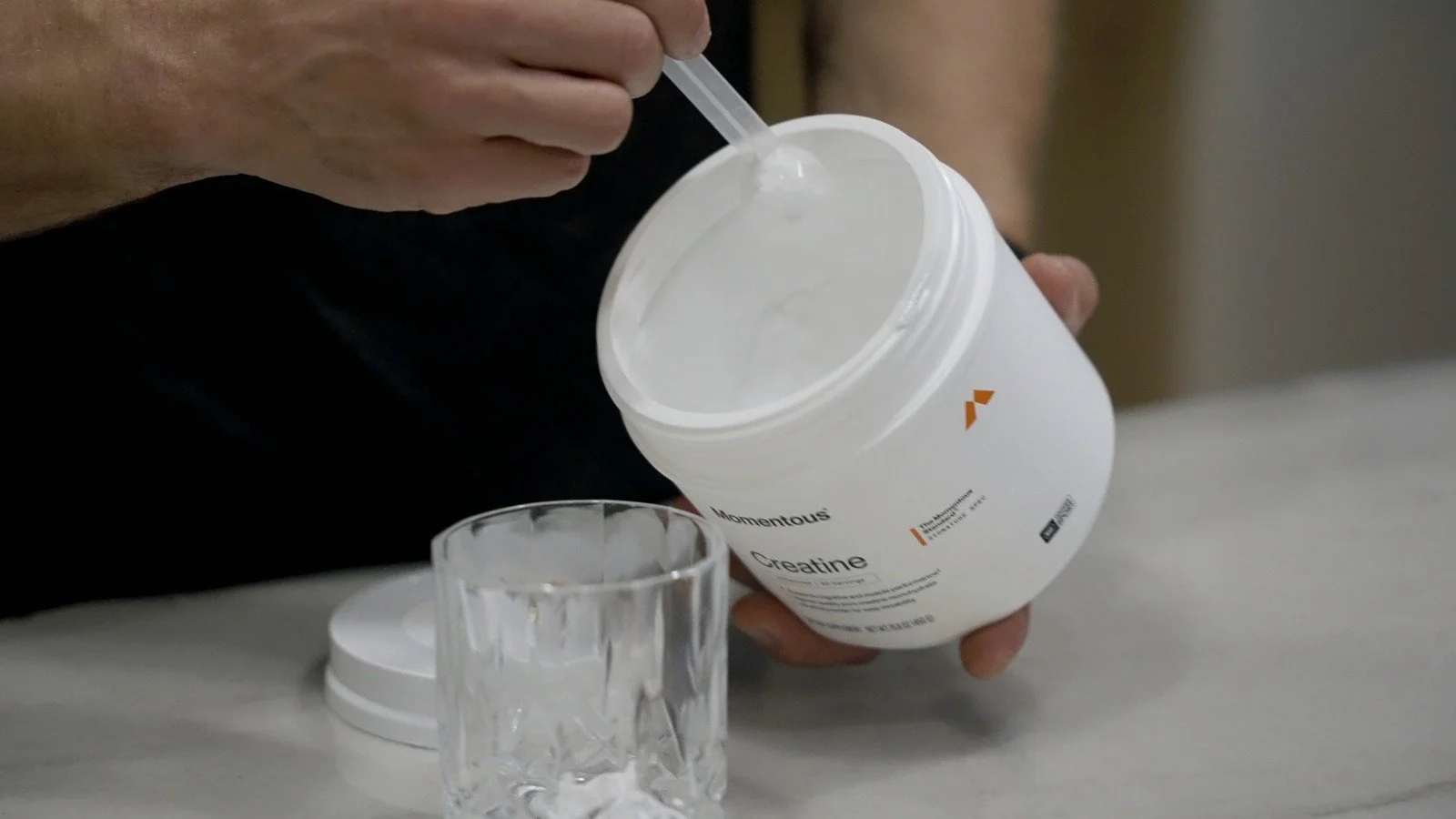
Want to go deeper? We made a full video on creatine for older adults.
QUICK ANSWERS
Does creatine work if you don't exercise?
In the 2026 Texas A&M study, adults 45 to 65 who took creatine without exercising gained lean mass and got stronger on bench and leg press. You'll get more out of it with strength training.
Does creatine make you gain weight?
It can add a couple of pounds, mostly water pulled into your muscles. In the study, the no-exercise creatine group gained about 2 pounds over 12 weeks.
How much creatine should I take after 50?
We recommend 3 to 5 grams of creatine monohydrate a day. The study used 10 grams a day.
Do I need a loading phase?
No. At a normal daily dose, your muscles fill up over a month or two.
Is creatine safe for your kidneys?
If you have kidney disease or another medical condition, talk with your health care provider before you start. Creatine can raise creatinine on blood work, so let them know you take it.
WANT HELP GETTING STARTED
If you have pain, kidney disease or another medical condition, check with your doctor or physical therapist before adding creatine.
Creatine works best on top of consistent strength training. If you're not sure where to start... that's what we're here for. Come try a week with us. We'll meet you where you are.
Stay strong,
Dr. Matt
RESEARCH
Chun J, Liu Y, Kibler GL, et al., Kreider RB (2026). Effects of creatine supplementation with and without exercise and diet intervention on body composition, cognitive function, and markers of health in middle-aged and older adults. Journal of the International Society of Sports Nutrition, 23(sup1). A 12-week trial of 64 adults aged 45 to 65 taking 10 grams of creatine monohydrate or a placebo daily, with or without exercise and diet.
